
[adinserter block=”3″]
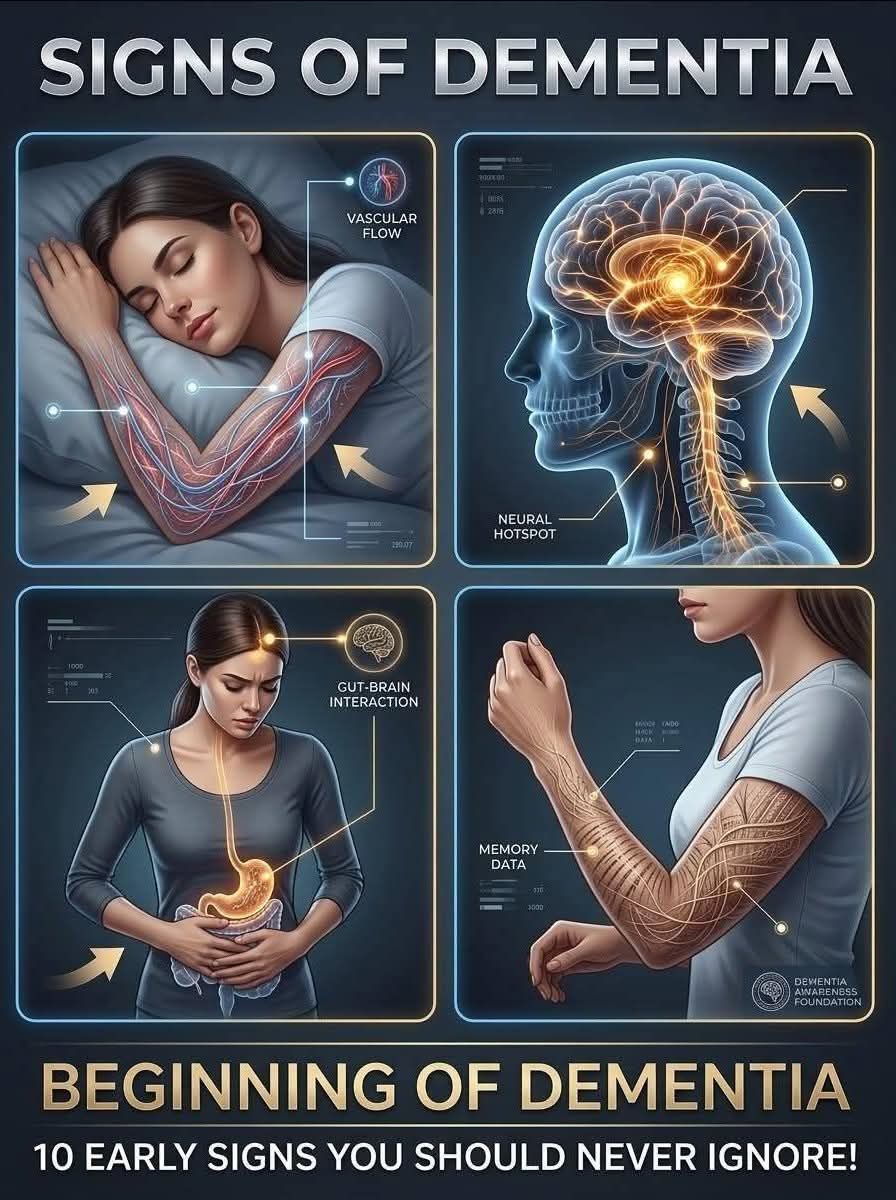
Dementia is not a normal part of aging, and the earliest symptoms can appear months or even years before a diagnosis is made. In the beginning, the changes are often subtle and may be mistaken for stress, fatigue, or simply getting older. However, recognizing these warning signs early can make a major difference in obtaining medical advice, planning treatment, and improving quality of life.
10 Early Signs of Dementia You Should Never Ignore
🧠 1. Memory loss that disrupts daily life
Frequently forgetting recently learned information, important dates, appointments, or repeatedly asking for the same information can be one of the earliest and most common symptoms.
🧠 2. Difficulty planning or solving problems
Tasks that were once simple, such as managing finances, following a recipe, or keeping track of bills, may suddenly become confusing or overwhelming.
🧠 3. Trouble completing familiar tasks
People may struggle with everyday activities such as driving to familiar places, operating household appliances, or remembering the rules of a favorite game.
[adinserter block=”4″]
🧠 4. Confusion with time or place
Losing track of dates, seasons, or the passage of time is common. Some people may forget where they are or how they got there.
🧠 5. Problems understanding visual images and spatial relationships
Difficulty judging distances, recognizing objects, reading, or distinguishing colors and contrasts can occur in some types of dementia.
🧠 6. Difficulty finding words while speaking or writing
A person may stop in the middle of a conversation, struggle to find the right word, repeat themselves frequently, or call objects by the wrong names.
🧠 7. Misplacing things and losing the ability to retrace steps
Items may be placed in unusual locations, such as keys in the refrigerator or glasses in a cupboard, followed by an inability to remember where they were left.
🧠 8. Poor judgment or decision-making
This can include unusual spending habits, neglecting personal hygiene, or making decisions that seem out of character.
🧠 9. Withdrawal from work or social activities
People may avoid conversations, hobbies, family gatherings, or activities they once enjoyed because they find them difficult or frustrating.
🧠 10. Changes in mood, personality, or behavior
Increased anxiety, irritability, depression, confusion, suspicion, or sudden mood swings can sometimes appear before memory problems become obvious.
Other symptoms that may develop over time include:
Difficulty concentrating or following conversations.
Repeating the same stories or questions.
Becoming easily confused in unfamiliar environments.
Trouble recognizing familiar faces or places.
Increased dependence on family members for daily tasks.
Problems with balance or coordination in some forms of dementia.
Sleep disturbances and changes in sleeping patterns.
When should you seek medical advice?
Occasional forgetfulness happens to everyone and does not necessarily mean dementia. However, if memory problems or changes in thinking begin to interfere with daily life, work, relationships, or independence, it is important to consult a healthcare professional for an evaluation.
Early diagnosis can help identify treatable causes of memory problems and provide access to support, treatment options, and planning for the future. Not every case of memory loss is dementia, but persistent or worsening symptoms should never be ignored
[adinserter block=”5″]